
Our Garden's Journey: From Overwhelmed to Inspired
As a family of four, including three train enthusiasts, our garden has become a canvas for imaginative play and outdoor adventures. While the space offers potential, it currently faces a few challenges. The lawn is uneven and patchy, requiring some levelling. The fencing on one side needs urgent attention, while the other side, though structurally sound, could benefit from a fresh coat of paint. An old, weathered shed dominates the lower end of the garden, and worn-out decking sits adjacent to the conservatory. Did I also mention the two football goals that now take up permanent residence on the lawn?
As I stand looking at it, I ponder where to start. The sheer scale of the task can be overwhelming at times. Where to begin, and how far can we realistically progress before time, weather, or financial constraints intervene?
Making a Start
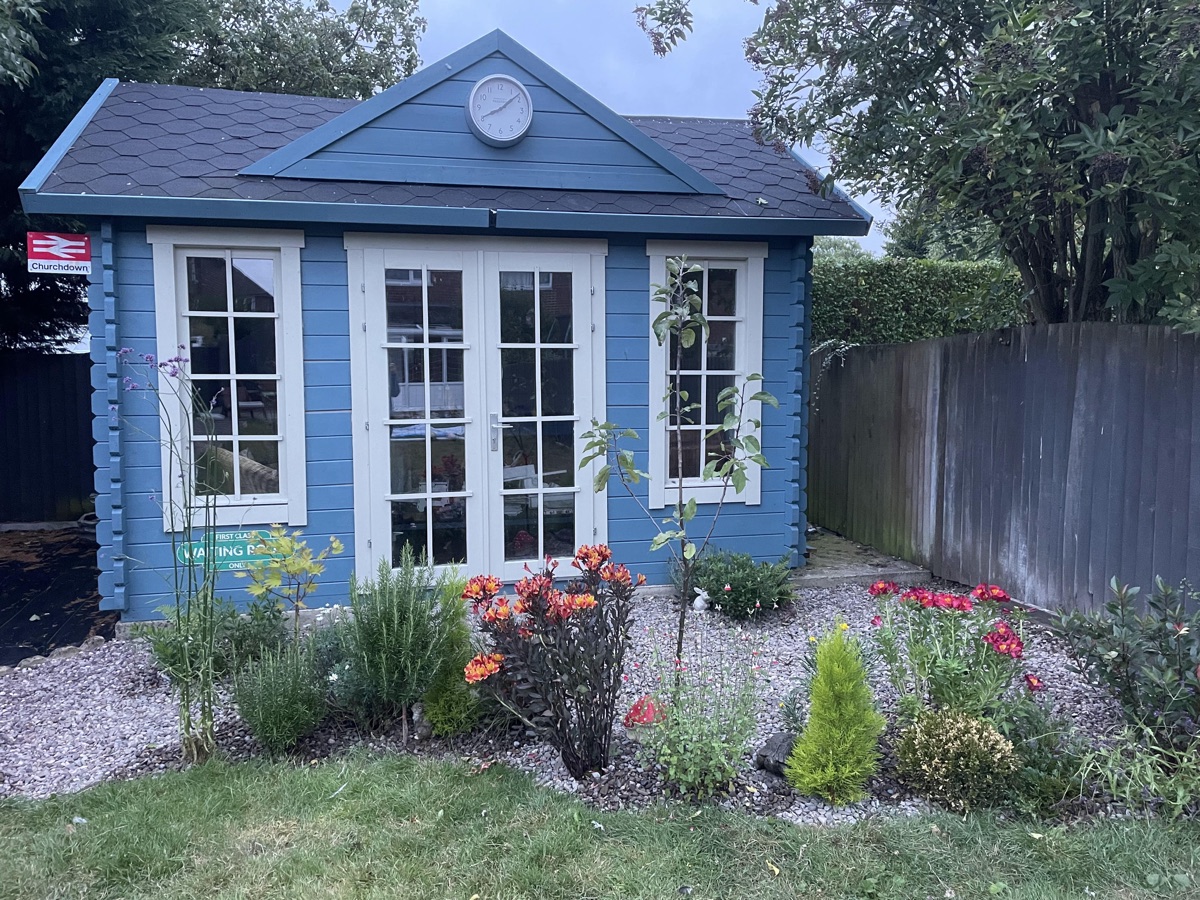
With a renewed sense of purpose, I decided to start at the back of the garden. The old, weathered shed, a relic of bygone days, was the first to go. In its place, a brand-new summer house, aptly named “The Railway Cabin,” now stands. This cosy retreat is the perfect home for my partner’s model railway, a collection of inherited tracks, engines, and carriages. The space is also versatile, accommodating a fold-away desk I cleverly crafted to allow for remote work without obstructing the window.
A key decision we made during the construction phase was to opt for a slightly smaller summer house than the concrete base would allow. This intentional choice has created a maintenance gap around all four sides, providing easy access for painting and ensuring proper drying after rain. By leaving this space, we hope to prolong the life of the summer house. If you’re planning your own summer house, I highly recommend considering this approach instead of placing it directly against boundary fences or hedges.
Choosing your summer house
When choosing a summer house, several key considerations come into play. Shape and design are paramount: we opted for a symmetrical design with a clock tower on the roof, evoking a vintage train station. Wood thickness is another crucial factor; we selected thick wood to create a watertight space suitable for year-round use, complete with electrics.
Before finalising your plans, I’d strongly advise checking with your local council regarding planning permissions and any restrictions, especially if you’re considering a raised or elevated design.
Grand plans vs reality
Sometimes our grand plans for the garden evolve and change. The once-envisioned “Wind in the Willows” garden figures corner now seems a bit silly with two football-mad boys. The peaceful pond idea has been put on hold with the potential arrival of a furry, four-legged friend. And the dream of a serene nature reserve at the back of the garden feels increasingly distant.
But that’s the thing about gardens: they adapt with you. The best gardens are the ones that reflect the life being lived in them right now, not an imagined future version. Embrace the football goals. Make peace with the unevenness. Start somewhere, anywhere, and build from there.
What I’ve learned
The most important lesson from our garden journey? Progress over perfection. Tackling one thing at a time (the summer house, then the fence, then the lawn) makes the overwhelming feel manageable. And each small win gives you the momentum to keep going.
If your garden feels too much to handle on your own, that’s exactly what I’m here for. Whether it’s getting stuck in for a day’s clearance, helping you plan what to tackle first, or taking on the regular maintenance so you can enjoy the space without the stress. I’d love to help. Get in touch for a free chat →